
PCC Backs Lords' Waste Crime Inquiry
28th October 2025
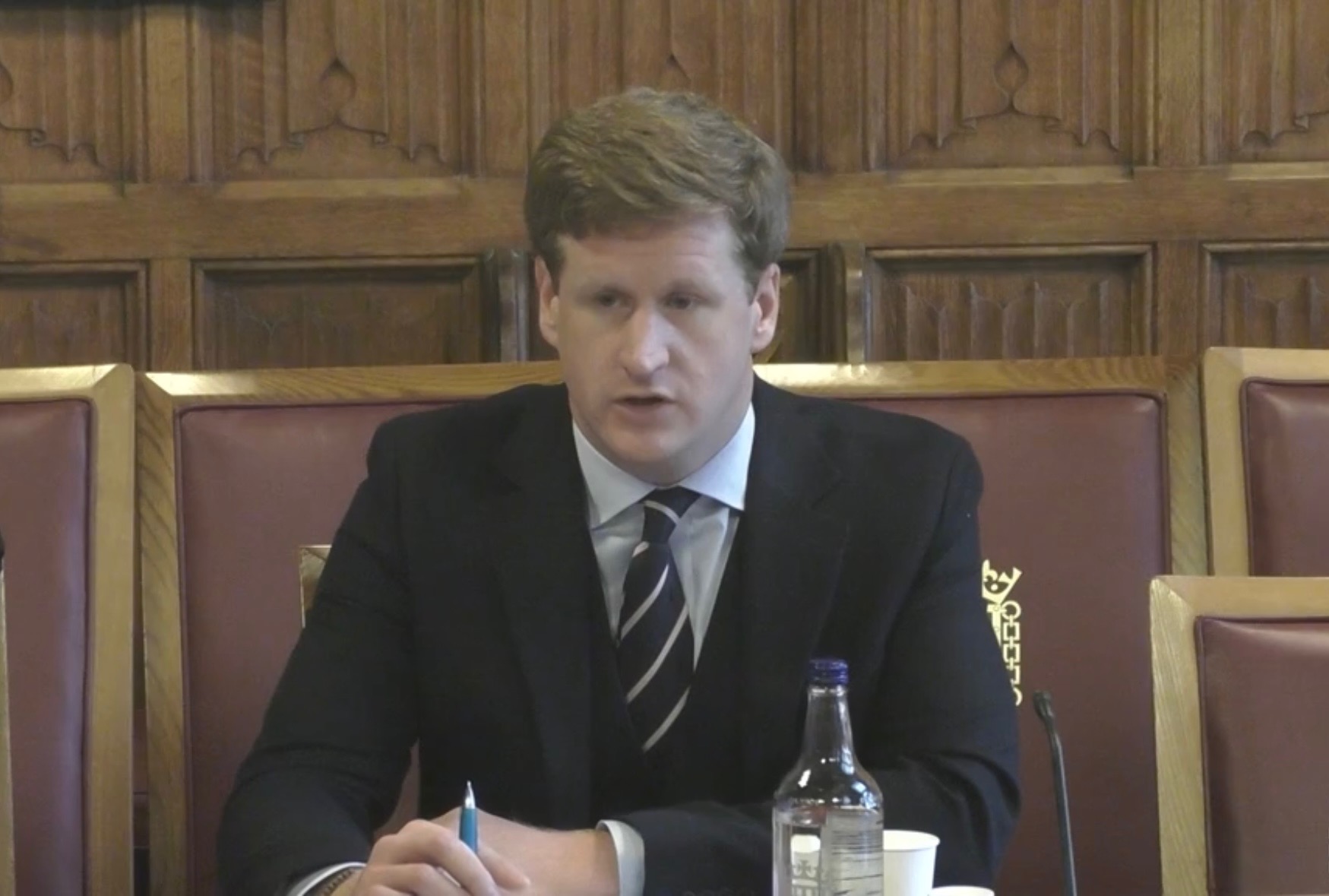
Kent’s Police and Crime Commissioner backs House of Lords Environment & Climate Change Committee’s call for an Independent Review of waste crime.
Following the publication of the House of Lords committee report PCC Matthew Scott supports the Committee in its call for the Government to get tough on serious and organized waste crime and the response to it by the Environment Agency.
Mr Scott said:
“I welcome the findings and recommendations made by the House of Lords Environment and Climate Change Committee.
I was pleased to be invited to give evidence as part of this inquiry and to highlight the impact this activity has on our communities, wildlife and countryside.
That is why I made environmental crime and fly tipping a priority in my police and crime plan. Together with the Environment Agency, Kent Police and local authorities I am committed to creating a joined approach to do everything I can to stop both fly tipping and organised waste crime in Kent.
This is not something that Kent Police or my Office can do alone. It will require a multi agency approach and I am pleased to see that the inquiry has made some clear recommendations to the Government, which includes the need to ensure that the Environment Agency is appropriately funded and staffed.
The work done at a local level by Kent Police’s Rural Task Force demonstrates that it is possible to tackle this problem. As I stated in my evidence, I recently joined a multi agency day of action led by Kent Police to ‘deny the roads’ to these individuals. This type of activity in our local communities is vital to tackle the blight of waste crime and fly tipping. This event saw over 30 vehicles stopped for multiple offences, with lorries being impounded and drivers fined.
Despite the strong direction and proactive work locally, policing nationally needs to show some leadership and demonstrate what they are doing to tackle this problem and support other agencies.
Looking ahead I will work with partners to ensure that we do everything we can to prevent illegal fly tipping and organised waste crime and ensure that the relevant agencies respond in a timely manner to prevent further offending and bring those who responsible to justice.”
ENDS
Note to editors:
Matthew Scott is available for interview upon request.
Responsibility for waste dumping falls across several agencies. Local authorities are responsible for investigating, clearing and taking appropriate enforcement action in relation to small scale fly-tipping on public land. The Environment Agency is responsible for dealing with large-scale fly-tipping (more than a lorry load), hazardous waste and fly-tipping by organised gangs. On private land, it is normally the responsibility of the landowner to remove the waste.
The Committee made the following recommendations:
- Our overarching recommendation is that the response to waste crime, from prevention and reporting to prosecution, must be subject to a root and branch review conducted independently of the Department for Environment, Food and Rural Affairs, the Environment Agency and HMRC. This review must consider the extent and effectiveness of integrated working among the Environment Agency, HMRC, National Crime Agency, policing and local authorities. This must also incorporate an investigation into the intelligence received and action taken in relation to the egregious events at Hoad’s Wood (a Site of Special Scientific Interest) and the six other similarly large illegal waste sites of which the Environment Agency is aware, with a clear roadmap to how further such transgressions will be prevented. Given the urgency, this review must be completed and the Government to have responded at the latest by May 2027.
- In relation to targets for waste crime, the Department for Environment, Food and Rural Affairs should develop interim targets with a comprehensive set of metrics to measure progress, which should be published quarterly.
- To end the merry-go-round of reporting experienced by the public and enable reports to be responded to promptly, the Government must work with the Environment Agency to establish a single telephone number and web portal which can receive and, in accordance with a clear decision-tree, triage and disseminate reports of waste crime regardless of their type or source.
- The Joint Unit for Waste Crime should take immediate further steps to improve collaboration between bodies with responsibility for waste crime at the local level (especially policing, including regional organised crime units, and local government), particularly in respect of the handling of reports and sharing of intelligence, and to increase territorial police forces’ and regional organised crime units’ understanding of the severity of waste crime and its connections with other forms of serious and organised crime. The opportunities to develop stronger relationships with local authorities presented by local government reform and additional capacity in the Environment Agency’s local area teams should be seized.
- The Environment Agency’s allocated capacity to disrupt and investigate waste crime committed outside regulated operations has been insufficient and it has been prevented from diverting resources from its regulatory work to crime enforcement by the Treasury’s rules on managing public money. Those rules, their application and their consequences should be reviewed by the Department for Environment, Food and Rural Affairs and the Treasury as a priority, and the welcome additional funding provided to the regulator in 2025/26 should be maintained. The Environment Agency should implement its proposed waste crime levy.
- The Government must fully assess the risks that landfill tax reform will increase other forms of waste crime and lead to the abandonment of landfill sites before any decision is taken by the Treasury; and, if there is to be a transition to a single rate, appropriate mitigations to reduce these risks must be set out and put in place from the beginning of the transition period.
- We welcome the Government’s proposed reforms to the carriers, brokers and dealers regulations and waste permit exemptions. The regulations for the changes should be laid before Parliament by April 2026.
- The Government should ensure phase 1 of the implementation of mandatory digital waste tracking is delivered on time and provide funding to enable the expansion of digital waste tracking to waste carriers from 2027.